Exposure-aware approach
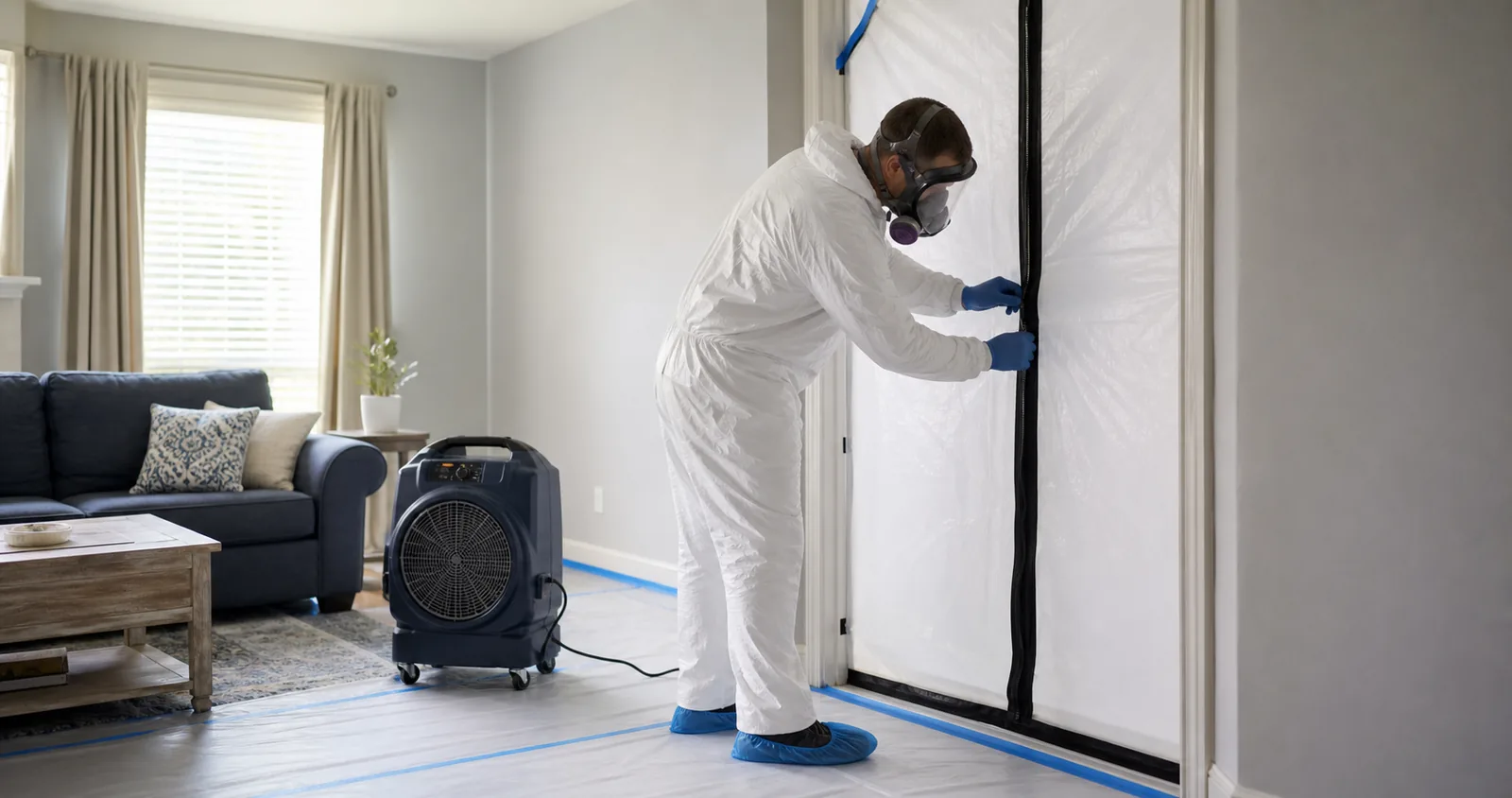
The work zone and PPE are selected around potential contact with blood and other affected materials.
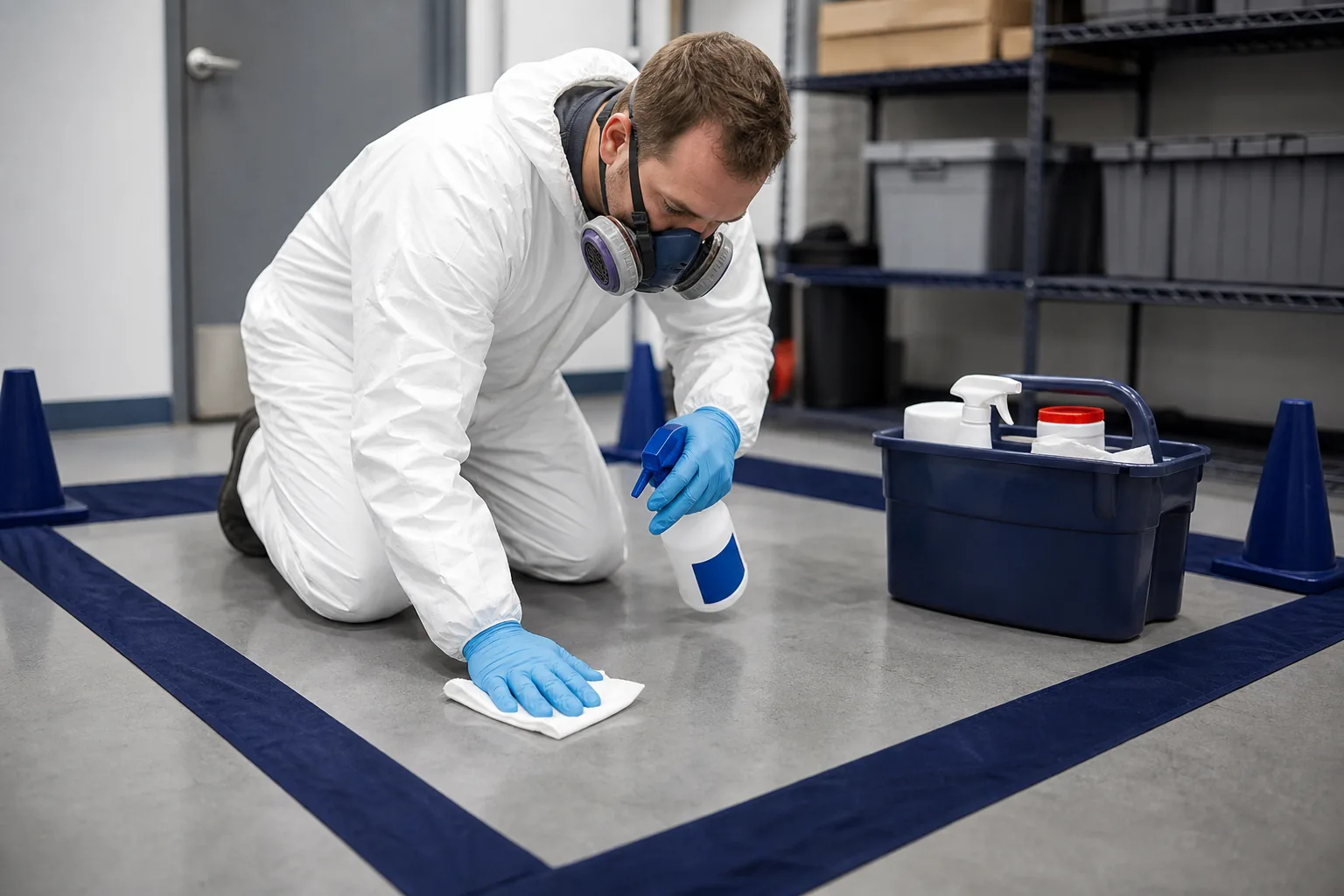
Blood can enter seams, grout, carpet backing, upholstery, subfloor, and unfinished materials. We isolate the area, evaluate the affected layers, and clean or remove materials according to condition and scope.
Blood cleanup is needed after injuries, medical events, accidents, crime scenes, or other incidents where human blood affects a property. Professional remediation treats blood as potentially infectious, protects workers and occupants, and accounts for materials that household cleaners cannot reliably reach.
We respond to residences, rentals, vehicles, shops, offices, hospitality properties, and public facilities across Norfolk and Hampton Roads. Commercial access, employee privacy, incident records, and reopening schedules should be discussed during intake.
The work zone and PPE are selected around potential contact with blood and other affected materials.
Seams, cracks, carpet layers, furniture, and adjacent finishes are considered before the scope is finalized.
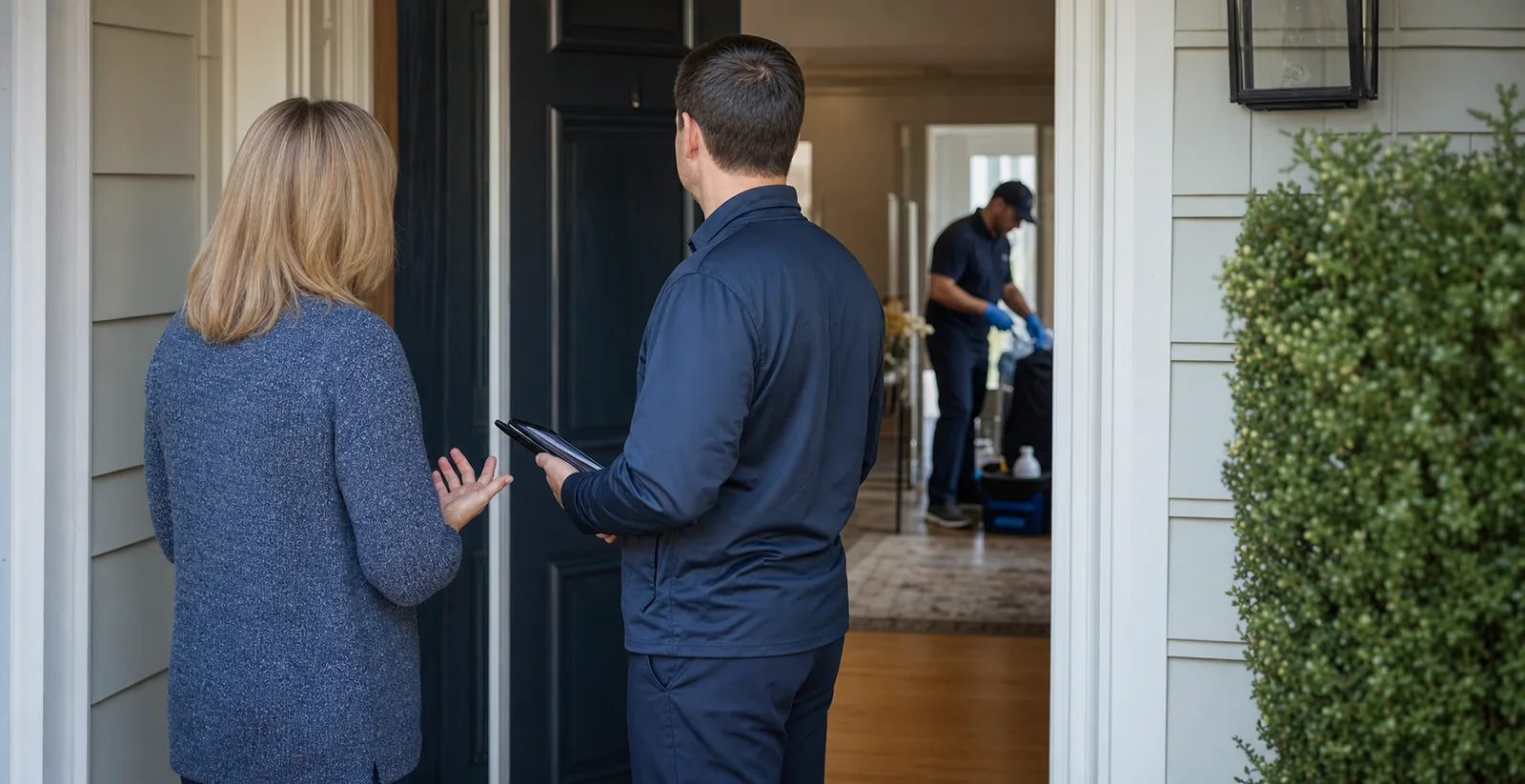
The authorized contact receives a straightforward summary of the area addressed and any remaining repair needs.
Every project is different. Your written scope should identify the work area, authorized removal, surfaces to be retained, products or equipment anticipated, access assumptions, and important exclusions.
Request an AssessmentAssessment of the visible area and accessible migration paths
Controlled access and surface protection
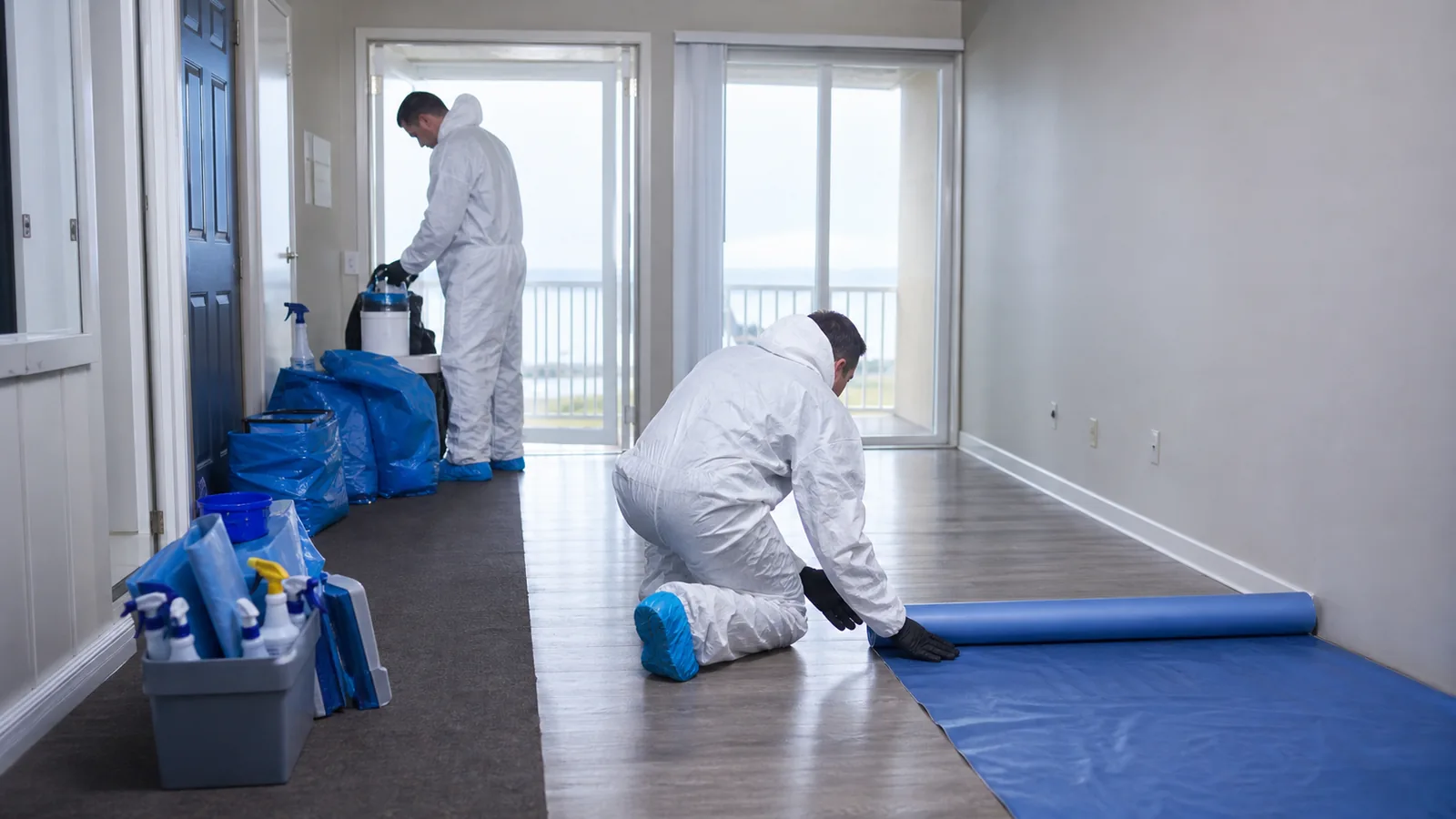
Removal of disposable or unsalvageable affected material when authorized
Cleaning before disinfection
Use of a surface-appropriate EPA-registered disinfectant according to its label
Waste packaging and handling arrangements based on the generated material
Final visual review of the scoped work area
Exact products are confirmed during scope planning. EPA-registered disinfectants are used according to their labels, including the intended surface, dilution, safety precautions, and contact time.
We establish the affected area, check scene status, and prevent unprotected entry.
The team evaluates the top surface and accessible seams, padding, subfloor, wall, furniture, or vehicle layers.
Gross material is removed, surfaces are cleaned, and the selected disinfectant is applied for the required contact time.
We inspect the scoped area and explain any materials that still require repair or replacement.
Do not enter an unsafe or unreleased area to gather information. Call with what you already know.
For property-specific advice, call so we can account for scene status, affected materials, access, and local response conditions.
(757) 553-9150 →Small household situations vary, but unprotected contact and hidden porous contamination can create risk. If the amount, source, surface, or exposure path is uncertain, isolate the area and request an assessment.
No. Product selection depends on the surface, intended use, label directions, compatibility, and required contact time. Bleach can damage finishes and should not be mixed with other chemicals.
Sometimes the visible carpet is only one affected layer. Carpet, backing, pad, seams, and subfloor must be evaluated. Cleaning or removal depends on the extent and ability to access all affected material.
Yes, depending on access and the affected materials. Seats, carpet, padding, trim, seams, and underlying panels may require separate decisions in the scope.
Call for urgent dispatch or send the details you can safely share. We'll explain the next step and how a written scope is prepared.